Heavy equipment overheating
The gauge climbs under load, or coolant is reaching the ground. The temperature may rise only while digging, pulling, or climbing, or the machine may run hot the whole time it works. Packed coolers, a split hose, the coolant level, and whether the fan engages are checked at the machine.
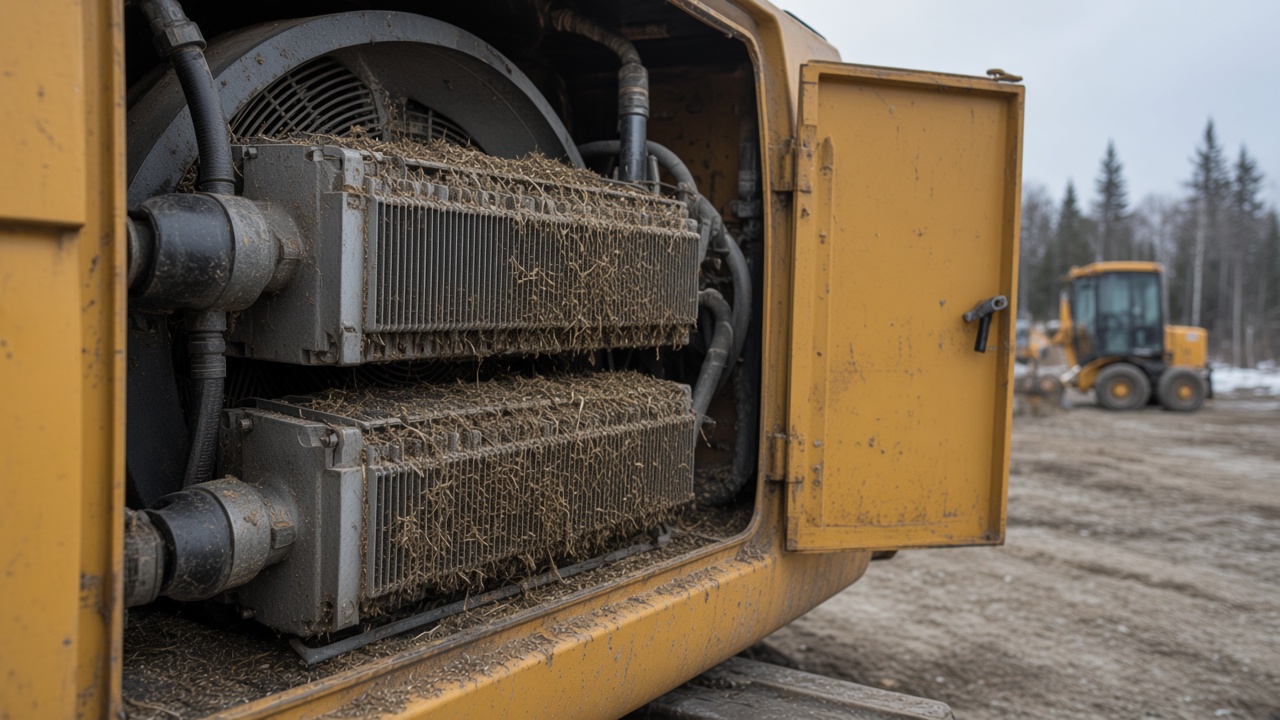
Overheating is a temperature rise under load, or coolant leaving the system. Coolers packed with debris are common in hay and in the bush. A split hose, a leaking radiator or a fan that does not engage is the other typical pattern.
A hot cooling system stays under pressure. The radiator cap stays closed until the machine has cooled. A packed cooler, a low level, a split hose, or a fan that will not engage are the usual findings. Whether the temperature rises only under load, or all the time, changes what gets checked first.
What you might be seeing
- The temperature gauge climbs while digging, pulling or climbing.
- Coolant on the ground, or a sweet smell at the coolers.
- The machine runs hot in the bush or in hay, then cools on the road.
- A fan that will not engage, or a belt that is off.
Before a visit
- Let the engine idle down and cool before shutdown, unless coolant is being lost quickly.
- Never open a hot radiator cap.
- Look for packed debris on the coolers. It builds quickly in the bush and in hay.
- Note whether it happens only under load or all the time.
- If the machine is on the road, set the triangles out and stay off the traffic side.
When to call
Shut the machine down and book a visit if the temperature keeps climbing or coolant is being lost. The rate and travel are confirmed before the trip.
Packed coolers are also caught on a maintenance visit. A hydraulic cooler buried in debris can sit next to a leaking hose.